Xiamen, China: a look at the Travel Retail industry and long layovers
- Kendal Ann
- May 18, 2020
- 6 min read
Touted as China's coolest travel destination by CNN, Xiamen is a small port city in the southeast Fujian province. It is an ideal city to explore during a layover with beautiful landscapes, abundant walking paths, and easy-to-navigate transport options. If you are looking to travel to Xiamen or researching more on the city since you have a long layover, this article is for you. By traveling you are supporting not only the tourism industry but the new category within the retail industry called Travel Retail.

Traveling to China was never high on my list of places to go. I would love to see the Great Wall and explore the country, but there are other places higher on my list.
I ended up going to Xiamen twice while traveling back to Australia from the United States. Mainly because Xiamen Airlines was offering extremely affordable flights due to recent expansion in servicing the LAX airport. Both times I traveled to Xiamen, I was on a 15-hr layover. Luckily, I was allowed to leave the airport one of those times to explore the city.
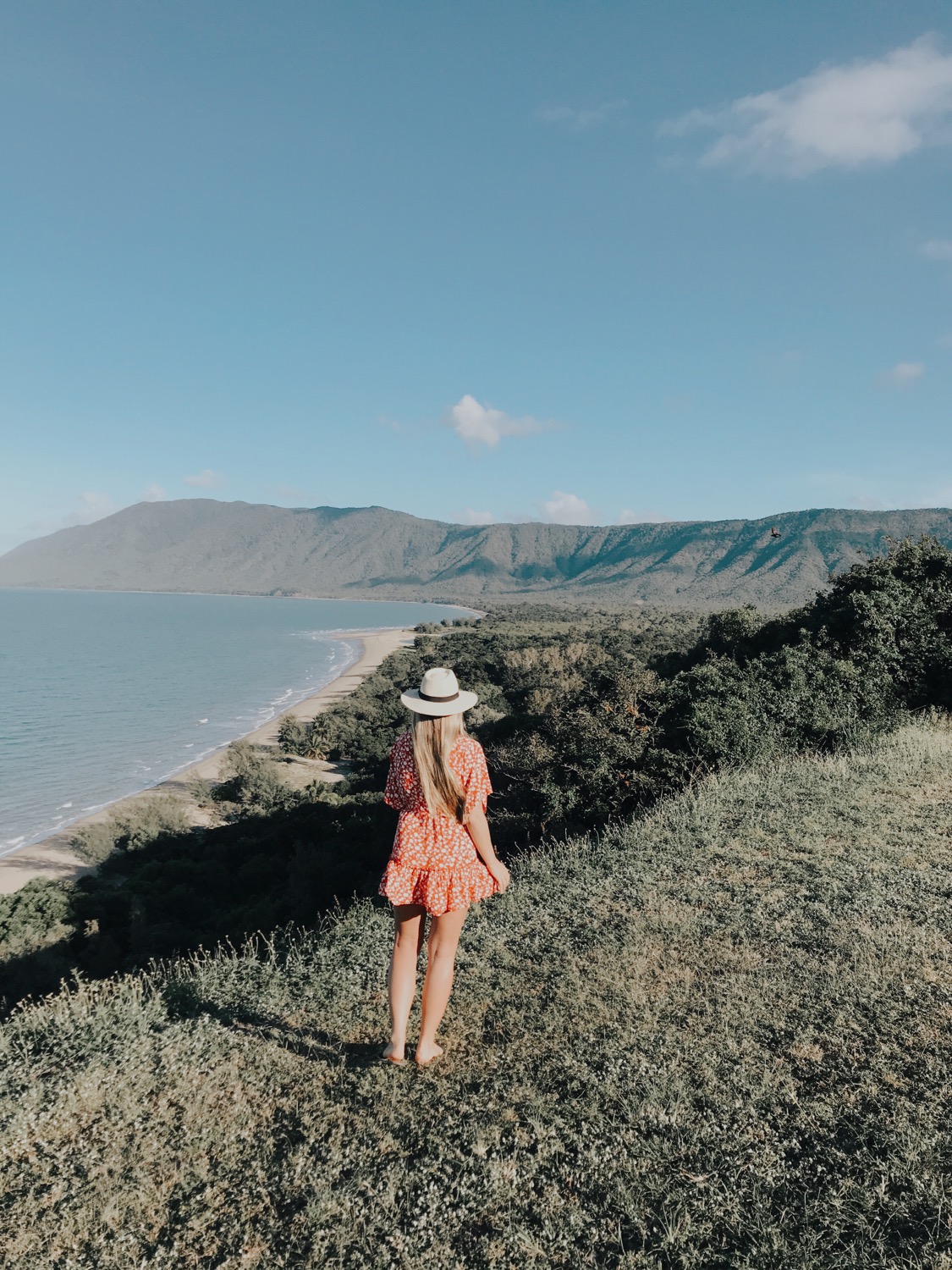
As part of my flight package, I had an option to take a free hop-on hop-off bus tour. (I think this should be an option for every airline with a long layover). I had no idea where I was going but I was able to see so much of Xiamen in a short amount of time. To my surprise, there was a beach! Baicheng Beach is very close to the city center and Xiamen University. While I was there, no one was really swimming. It seemed the beach was more of a destination for walking. It has to be one of the nicest, calmest beaches I have ever been to.




From standing on Baicheng Beach, there is a view of a large statue of Koxinga which is located on Gulangyu, Gulang Island, or Kulangsu. Gulangyu is a pedestrian-only island, and it seems like a really interesting place to visit. I did not know about the island until arriving, so I was unable to fit the destination into my day.
Walking around the beach offers opportunities to shop from various street vendors and small convenience stores. There is a dedicated walkway along the whole stretch of the beach, and there are multiple bus stops.
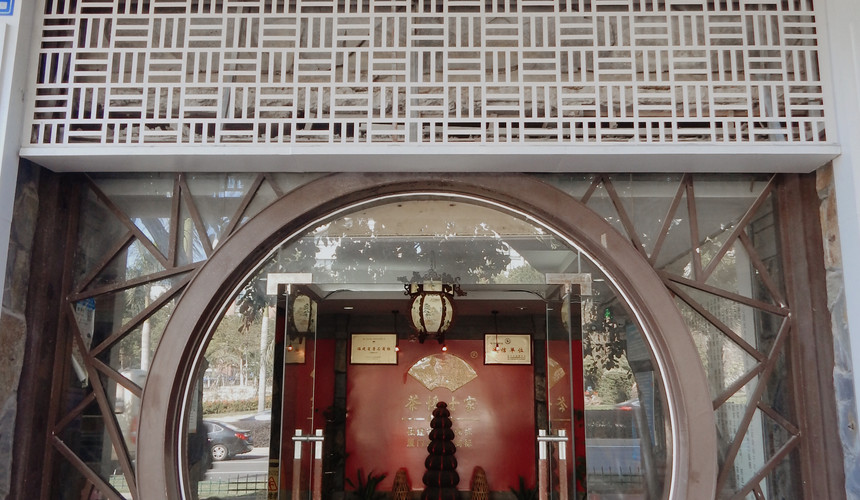
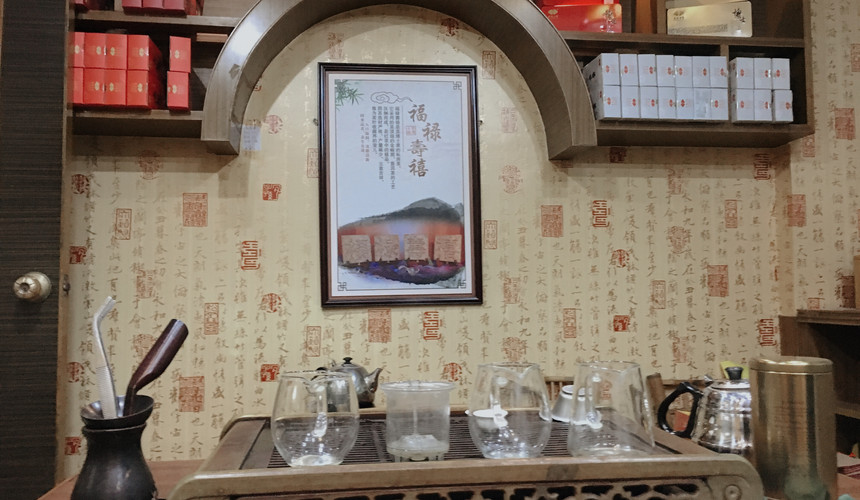
One experience that I am very happy that I was able to have was going to a traditional Chinese tearoom! I am not an avid tea drinker, but it was one of those 'have to do' things while in China. I have no idea what type of tea I drank. I'm going to guess that most likely one was green tea. The tearoom was part of what seemed like a small shopping mall. It had a small retail store that had hand-made toys and gifts, and a restaurant.
There was a massive language barrier between myself and the women working in the tearoom. Not one of them spoke English, and I do not know any Chinese. Since the language barrier was so big, I was unable to figure out if it was one large store or separate entities.
From research online, I believe this tearoom, Dr. Tea, is very well-known. It is a family-run tea room that has been part of the tea industry for centuries. I would highly recommend making this tearoom a part of your itinerary due to its history and the attention paid to keeping the experience as traditional as possible.






If every long layover had the option to attend a day spa or natural hot spring, I think everyone would be in a better mood while traveling.
Before going to China, I had never been to a natural hot spring that you could swim in. To be honest, I did not know about the hot springs in Xiamen until I overhead other travelers talking about it at the airport. I took a cab over to the resort with another American traveling to Australia, and it was an experience trying to navigate without being able to speak to the driver.
Once we arrived, I understood why the hot springs are so popular. According to the Xiamen Riyuegu Hot Spring Resort website, the resort features nearly 100 open-air and indoor hot springs. They were amazing! Every pool had a different scent and health benefit. For example, there were some that had added potassium, sodium, or magnesium. Various health benefits (depending on the added ingredients) included increased blood circulation, improved digestion, and arthritis relief. I can't say I felt much different, besides being very relaxed. Throughout the resort, there were also tea stations for refreshment and there was even an outdoor restaurant.
Since I did not know about the hot springs and the fact that it was the middle of winter, I did not pack a bathing suit in my carry on. I decided to take the risk and just go to the resort and see if they had a gift shop selling bathing suits. I figured if they didn't, I'd be able to either get a massage or walk around. Luckily, the gift shop had a section dedicated to swimwear. A smart business decision by the owner, if I say so.
The resort had shower facilities and free shampoo/conditioner and soap. I did have to rent a storage locker and a towel. All of the facilities were very clean, and overall the experience was very affordable. It also was worth the expense in order to shower and feel clean after flying for almost 24 hours from the east coast of the United States to China. For more information on the resort, click here take a look at the TripAdvisor reviews. At the time of writing this, the experience has 4.5 stars and is ranked #3 on things to do in Xiamen.


I did not spend much time shopping in Xiamen. While on the bus, I did see many major shopping centers and I even saw a Sam's Club. I figured with such little time in the city, I rather spend more time at different destinations.
While walking along Baicheng Beach, I stumbled upon the Hulishan Fortress. It wasn't a very busy time of the year, so it was the perfect time to walk around the fortress uninterrupted. Built in 1894 during the Qing Dynasty (1636–1912), it is now a significant cultural and historical landmark. The fortress is known for its cannons that were used to protect from invasion.
The gardens are beautiful, and there are hundreds of artifacts preserved from the Qing era. There are modern amenities like vending machines. I was able to buy a canned Coke with all writing in Chinese.


It may be obvious to you now that there is so much to do in Xiamen during a long layover. It is important to book the connecting flight out of the city with your original flight. The free options are not available if you book separate flights. If stuck in the airport, there is also a lot to do. I could write a whole post on how I spent 12 hours at the airport the second time I flew through Xiamen, which would also highly illustrate the development of Travel Retail.
The retail and tourist industries in Xiamen are very well developed. There are no shortages in things to do and see. I would stay away from shopping centers and spend time wandering the city. That is how I found such great experiences. I would recommend to anyone flying from the US to either Asia or Australia to fly through Xiamen and experience the long layover. It is a great way to see a new country.
During my experience in Xiamen, my money was allocated mostly to the travel and tourism industry, not the retail industry. I paid for my entry into the natural hot springs, transportation, all of my meals, a new bathing suit, and small souvenirs. Most areas where I spent money on food or trinkets were tourist areas that strategically identified opportunities to earn more money by appealing convenient to consumers.
I am a perfect example of the recent changes in consumption habits caused by travelers. The global tourism industry has been steadily increasing over the past decade. The increase in tourists and travelers has affected the retail industry, and there is now a dedicated category called Travel Retail [2]. Characteristics of the growing market that is Travel Retail include fast and impulsive transactions and customer-experience spaces that appeal to customers' need to feel more at every moment while traveling [2]. Shopping is one of the most important experiences for travelers, and often times, cities rely on income from tourists [3]. Multi-national brands should conduct market research to understand the area and if there is a prominent tourism industry. By doing so, brands can appeal to not only the local consumer but also the tourist shoppers.
Hopefully, once the world gets past the COVID-19 pandemic, the travel industry will be able to bounce back to what it was before which would lead to an added boost to the retail industry.
What do you think about the Travel Retail industry? Where have you travelled to? Comment below!
Resources:
[1] Explore Xiamen, China's new capital of cool
[2] How Does the Development of World Tourism Affect Travel Retail?
[3] Impact of Shopping Tourism for the Retail Trade as a Strategy for the Local Development of Cities


Comments